Software Guides · 7 min read
Best Treatment Plan Software for Chiropractors
Published:
Last updated:
If you want a finished treatment plan document without changing your EHR, ChiroReports Treatment Plans is our pick. If you want the plan wired into scheduling, charting and billing, compare the EHR entries below. They solve different problems, and many practices need both.
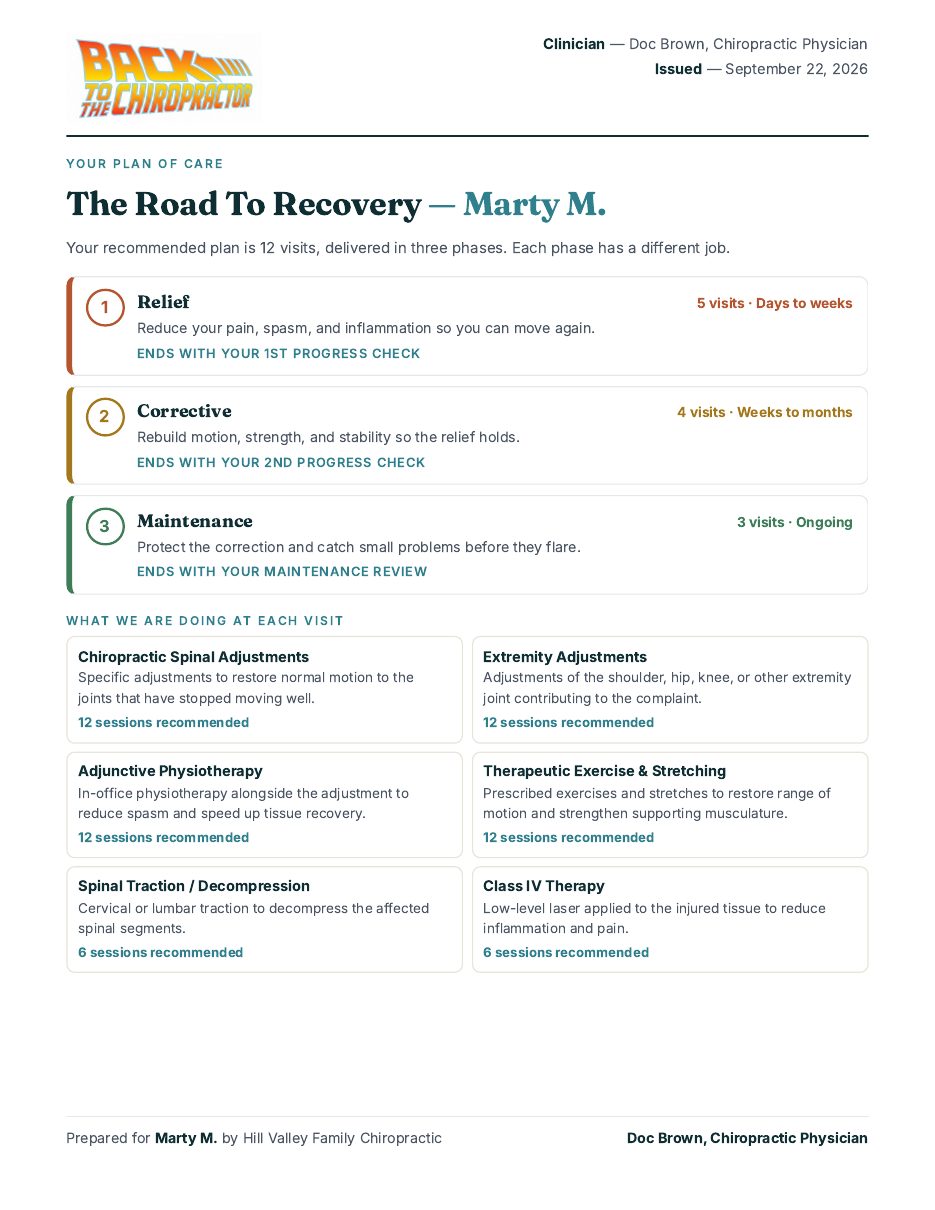
A chiropractic treatment plan has a few jobs. It ties goals to the diagnosis, states visit frequency and duration, lists the modalities you plan to use and sets the points where you will re-evaluate. Your patient needs to understand it. In a PI case, an attorney or insurer may read it too.
This guide is published by ChiroReports. Vendor descriptions come from each company's own public website, not independent product testing. No software can promise that a plan will be approved, paid or accepted by any reviewer.
The Honest Split: Plans in the Chart vs. a Plan Document
- Treatment planning inside an EHR: The plan lives in the patient chart and the visit flow. It can connect to scheduling, visit tracking and billing.
- A dedicated plan document: A finished, readable document your patient and other readers can follow. It sits alongside the chart rather than running the office.
Neither approach is wrong. The question is which job you need done.
How We Compare Chiropractic Treatment Plan Software
- Plan completeness: Goals, frequency, duration, modalities and re-evaluation points.
- Time to produce: Collecting findings, drafting, checking and correcting. Competitor speeds were not benchmarked.
- PI suitability: Can a non-clinician reader follow the plan and its reasoning?
- EHR switch required: Are you adding a tool or replacing your office system?
- Free option: Can you produce a usable plan before paying?
Best For: Quick Picks
A finished plan document alongside your current EHR: ChiroReports Treatment Plans.
Plans connected to a chiropractic EHR and visit flow: ChiroTouch, EZBIS, Genesis by ClinicMind and ChiroFusion.
Plans inside a multi-discipline practice system: Jane App.
These picks describe fit, not rankings.
ChiroReports Treatment Plans: The Finished Plan Document
Treatment Plans is one of six ChiroReports tools, alongside X-Ray Reports, Narrative Reports, the X-Ray & MRI Translator (14 languages), Supplement Plans and Exercise & Stretch Plans. A report takes about 3 to 5 minutes.
The positioning is simple: keep your EHR, add the report writer it never had.
- Strengths: A finished, branded plan document that works alongside your existing EHR, with no switch required.
- Privacy: Patient names and dates of birth never leave the browser. The workflow is HIPAA-aligned.
- Limitations: ChiroReports produces the treatment plan document. It does not schedule the visits, track plan adherence inside a chart or run billing against the plan. Practices wanting the plan wired into scheduling and billing should weigh the EHR entries.
- Pricing: Free Forever is $0 with one report per month and no credit card. Pay Per Report is $19 per report. Scale is $149/month. Enterprise is $139 per provider/month at two providers, totaling $278/month. See current pricing.
ChiroTouch: Planning Inside a Connected Practice System
ChiroTouch's practice management page describes a connected system with charting, scheduling, billing and AI-assisted SOAP notes. It also describes insights into treatment plan adherence.
- Strengths: The plan sits next to charting, scheduling and billing in one system.
- Consider: Adopting it is a practice-management decision, not just a plan document decision.
Jane App: Treatment Plans in a Practice System
Jane's clinical documentation page describes treatment plans in the patient record and tracking progress across individual visits and care plans. Jane also covers scheduling, billing and patient communication.
- Strengths: A flexible, charting-first system used across many disciplines, including chiropractic.
- Consider: The plan lives in Jane's chart and workflow rather than as a standalone chiropractic plan document.
EZBIS: Care Plans Inside an EHR
EZBIS's EHR page describes detailed care plans with alerts to upcoming changes, as part of an EHR that can run alone or with EZBIS billing and scheduling.
- Strengths: Care plans connected to the chart, with reminders as the plan changes.
- Consider: Best evaluated as part of an EZBIS office workflow.
Genesis Chiropractic Software: Now ClinicMind
The official Genesis site identifies the product as now ClinicMind EHR and describes SOAP notes, care plans, scheduling and documentation that feeds billing.
- Strengths: Care plans connected to documentation and billing.
- Consider: This is an EHR and billing decision, not a standalone document tool.
ChiroFusion: Custom Care Plans in a Cloud EHR
ChiroFusion's feature page describes creating and storing custom care plans and tracking care plans and authorizations inside its cloud EHR.
- Strengths: Care plans tied to authorizations and visit tracking.
- Consider: Fit depends on whether you want ChiroFusion as your EHR.
What a Complete Chiropractic Treatment Plan Includes
| Element | What to document |
|---|---|
| Diagnosis | The conditions the plan addresses |
| Goals | Specific, measurable goals tied to those findings |
| Frequency and duration | Visits per week and for how many weeks |
| Modalities | Adjustments, therapies and home care you plan to use |
| Re-evaluation points | When you will re-examine and decide what comes next |
| Patient responsibilities | Home care and what your patient should report |
Where Plans Get Challenged in PI Cases
- Vague goals: "Reduce pain" is hard to measure. A goal tied to a finding or function is easier to follow.
- No re-exam points: Without scheduled re-evaluations, a reader cannot see when the plan is checked.
- Frequency without reasoning: State why the visit schedule fits the findings.
- Plan and notes disagree: Keep the plan and the daily record consistent.
Clear documentation helps readers follow your reasoning. It does not guarantee any outcome in a case.
Related Guides
Read Best Chiropractic Report Writing Software for the broader market and Best Narrative Report Software for Chiropractors for narratives. The comparison hub separates report-writer decisions from EHR decisions.
Frequently Asked Questions
What should a chiropractic treatment plan include?
Diagnosis, measurable goals, visit frequency and duration, planned modalities, re-evaluation points and home care responsibilities.
Do I need a new EHR to create treatment plan documents?
No. ChiroReports Treatment Plans works alongside your existing EHR with no switch required.
Does ChiroReports schedule visits or bill against the plan?
No. ChiroReports produces the treatment plan document. It does not schedule visits, track adherence in a chart or run billing. EHRs such as ChiroTouch, EZBIS, Genesis by ClinicMind and ChiroFusion keep plans inside the chart and office workflow.
Will a well-documented plan be approved by an insurer or attorney?
No software can promise that. Clear goals and re-exam points help readers follow your reasoning, but no approval, payment or case outcome is guaranteed.
Is there a free treatment plan option?
ChiroReports Free Forever is $0 and includes one report per month of any type, with no credit card required.
Spend Less Time on Paperwork.
Free forever plan. No credit card required.